
“Totally undemocratic”: Gigafactory 2.0 project and undeclared talks
From one question to a new E-car-fuelled transparency outcry near Berlin

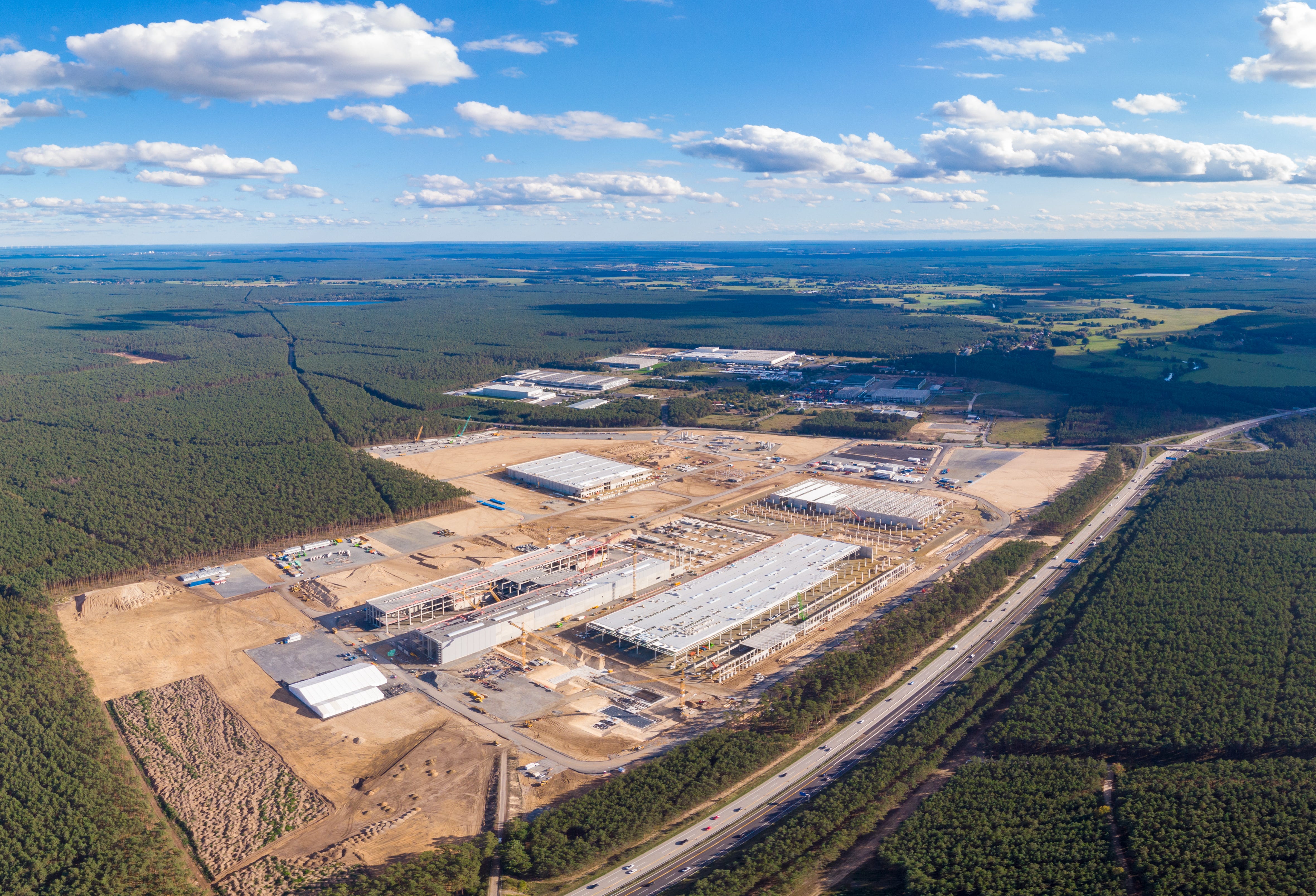
When I asked Steffen Schorcht, board member of the Bürgerinitiative Grünheide, his reaction to the Chinese company Dreame Technology allegedly aiming to produce the fastest electric car in a giant plant near the Tesla Gigafactory in Brandenburg, I could not imagine the following events. The Bürgerinitiative wrote a press release that got particularly noisy. Therefore, Brandenburg’s Minister-President had to admit there had been talks. The project is fully uncertain. But in the wake of an ongoing turmoil caused by Tesla’s installation, the State government’s methods have cast new outcry.
On the morning of September 21, 2025, I decided to check the most recent Google entries for “Tesla Gigafactory Berlin” – a Sunday morning activity as intriguing as what this research brought to light. A new protagonist had emerged in articles relating to this term: Dreame Technology, a Chinese company known for its vacuum cleaners.
Dreame announced last August its ambition to produce by 2027 a luxury electric car that will be the world’s fastest, a sort of E-Bugatti. For that purpose, CEO Yu Hao had visited potential production sites in Germany on September 8, according to Chinese sources. Investing directly in central Europe would allow them to be near potential customers, reduce costs, and benefit from a dense industrial infrastructure. As a result, reports alleged Dreame plans to build a factory near the Tesla Gigafactory on Berlin’s eastern flank, and implied it could be 1.2 times larger.
A potential Gigafactory 2.0 was big news. I needed to seek the reactions from a leading local activist opposing those pharaonic projects in a region facing imminent water problems.
“I haven’t heard anything about that,” responded Steffen Schorcht, visibly surprised.
“Do you have sources?”
Schorcht is a board member of the Bürgerinitiative Grünheide (Citizen Initiative Grünheide). Over the last years, this organisation has been campaigning against the installation of the Tesla Gigafactory on Berlin’s outskirts and its current expansion plans since this large industrial complex was built on a water conservation area without real citizen participation or transparency in decision-making. Individuals and groups (*0) joined this confrontation with Musk’s car manufacturer and local authorities.
Learning what could unfold with Dreame in his region echoed a too-familiar scenario for Schorcht.
From September 8, information about the alleged new project circulated in Chinese and English-speaking niche publications, whether about cars or business, without reaching the concerned place: Germany and, according to sources, Brandenburg.
While those reports did not catch the attention of German media, local authorities also did not communicate, unlike the Chinese business. This was only until September 21.
Bringing the information home
“I am appalled but not surprised”, reacted Schorcht after examining the sources I texted him.
No time to lose. He and his counterparts wanted to make this public. The board of the Bürgerinitiative was summoned. Its three members double-checked information and swiftly published a press release on that same Sunday: “Der Ausverkauf von Brandenburg geht weiter!” (“The sell-off of Brandenburg continues!”)
“It is rare for a press release to make a really big splash,” writes the left-leaning German paper junge Welt. “Most announcements of this kind just sit there, unnoticed, in the inboxes of media companies.”
No overcharged-inboxes-oubliettes this time. The German press (local and national!) jumped on the story, and Dreame hit the headlines of major publications on September 22. And questions followed – notably to Dietmar Woidke, Minister-President of Brandenburg.
At a press conference in Neubrandenburg following a joint cabinet meeting with the head of Mecklenburg-Western Pomerania on the following day, Woidke confirmed “there were discussions” with Dreame:
“In Brandenburg, we have had good experiences with preparing things well and calmly, as long as possible. Public reporting is often helpful, but there are also situations where it is not helpful”
This revelation about undeclared talks with an ambitious foreign investor, coupled with a questioning remark on transparency, did not go down well with those who had been advocating the contrary following Tesla’s rather unilateral establishment in the region.
“We haven’t had good experiences with Woidke!” retorts Schorcht.
After all, the curiosity to ask for his reaction on that Sunday morning was worth it.
A few weeks later, we are back with Steffen Schorcht.
Since then, while news outlets discuss potential locations, a Dreame factory in Brandenburg remains purely hypothetical. Some big media cast serious doubts, such as Bild, which titled “Brandenburg has no space for new electric car factory”.
But regardless of the project’s viability, this new episode certainly represented a new transparency outcry for the Bürgerinitiative Grünheide.
Uncertainty of a giga-project…
The press release of the Bürgerinitiative astutely mentioned an area in Fürstenwalde-Spree and Langewahl. This more than 400 ha wide forest between the river Spree and the A12 highway was recently studied to become an industrial and commercial site ready for investors, as local media reported in June 2025. Behind the lines, the note implied something many thought: here is a potential location near the Tesla Gigafactory for Dreame.
Back when the forest industrialisation became public, it sparked opposition. Local citizens created the Bürgerinitiative Walderhalt Spreetal, aiming to preserve natural spaces against a project that means to them a “loss of habitat, drinking water, fresh air, and recreational space.”(*1) As their zone to defend got linked to Dreame in the German media, they drew increased attention.
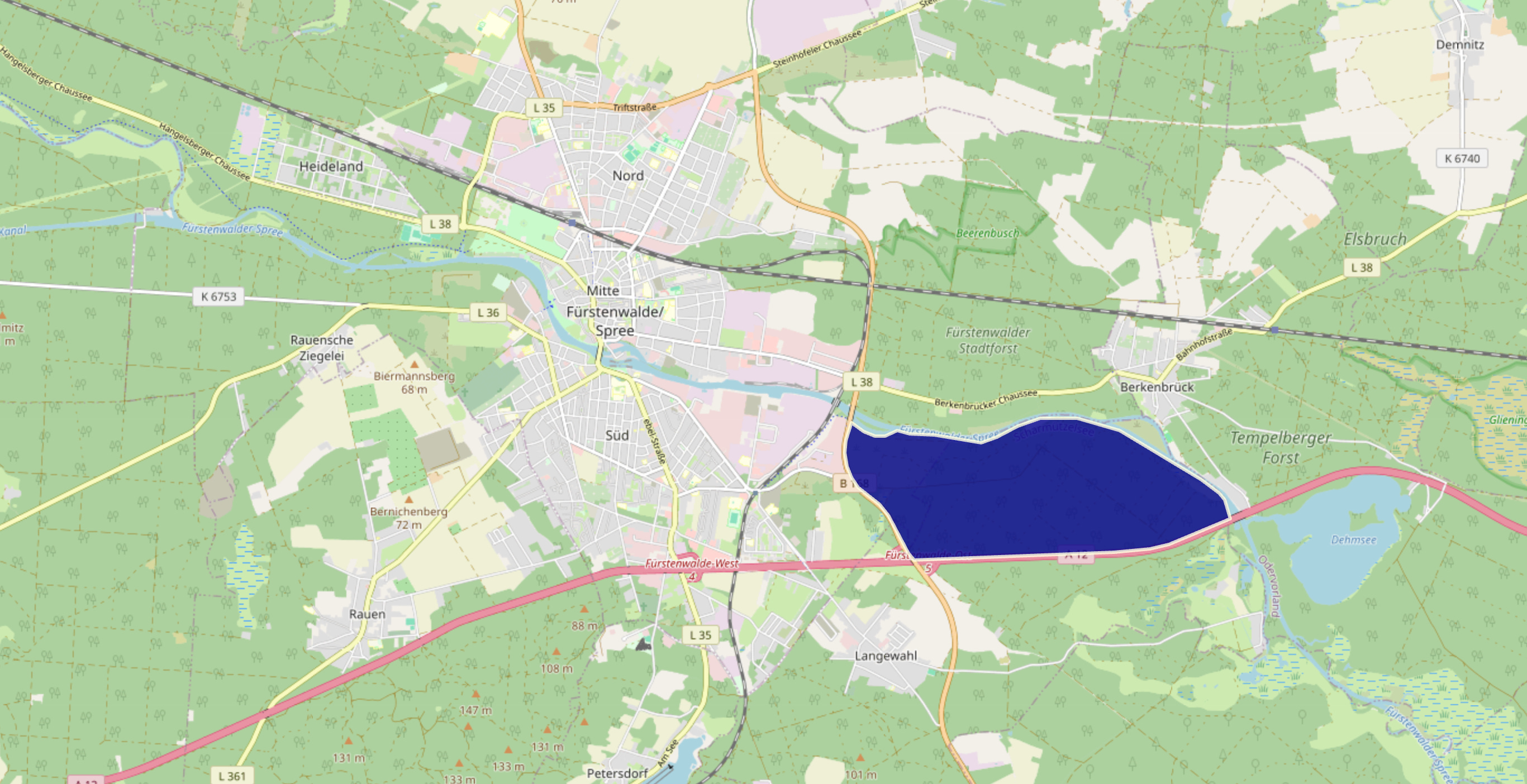
The district administrator Frank Steffen (SPD) explained that the envisioned area to be industrialised “is only 230 hectares”(*2), adding that “it would take three to four years to obtain building permits”. Those numbers do not fit Dreame’s alleged plan for a new giga plant launched by 2027.
Nonetheless, “we believe that this area has already been presented [to Dreame]”, says the Bürgerinitiative Grünheide. Schorcht and his counterparts fear a scenario à la Tesla Megafactory: the forest being industrialised piece by piece. Since the initially studied surface was more than 400 ha, “we are concerned that this area will be expanded”, adds Schorcht, whether for Dreame or anything else.
If this location aroused interest, other speculations multiplied. By mentioning an area in Eisenhüttenstadt meant to become an industrial zone bordering Poland, or the 600-hectare airfield in Welzow, regional outlets wonder where Dreame could find its match.
For now, Dreame’s giant factory in Brandenburg remains more of a speculation. Local experience with Chinese business even showed how projects can fall through, like when S-Volt threw in the towel while it was supposed to create 1000 jobs in Lauchhammer.
But there were discussions with local authorities that were not followed by official communication: a nagging point for the Bürgerinitiative.
…but a certain and renewed outcry for transparency in Brandenburg
“It was great advertising for Dreame”, laughs Schorcht. Their name in headlines might have increased their vacuum cleaner sales in Germany.
Conversely, it was less good press for the Brandenburg government, particularly the political force dominating the ruling coalition: the SPD (Social Democratic Party of Germany), which holds key positions such as Minister-President or Minister of Economic Affairs, Labour, Energy and Climate Protection (*3).
The reported Dreame plans are only hypothetical. The “discussions” might have led to zero. Yet, given the Tesla Megafactory precedent, such a situation – with undeclared talks between the State’s highest representatives and a foreign company with a significant project – was a renewed last straw for the Bürgerintiative Grünheide.
Before Minister-President Woidke’s confirmation about the talks on September 23, the Bürgerinitiative Grünheide contacted local institutions (many linked to the future industrialised area suspected to be appealing to Dreame): the Brandenburg Ministry of Economic Affairs, the Amtsdirektor of Scharmützelsee, the mayor of Fürstenwalde-Spree, and the Landesrat of Spree-Oder.
The first and the second did not answer. The spokesperson of the third claimed that they knew nothing. The fourth said the same.
In Schorcht’s opinion, it is a sign that major decisions are discussed within a “really small circle” in opaque fashion. “That’s totally undemocratic!”
“For us, it’s shocking to see that no lessons have been learned from the mistakes made with the Tesla settlement and that industrial policy continues to be pursued as it was in the nineteenth century, with the overexploitation of nature without involving the people and with massive ecological and social consequences,” he concludes.
This Dreame affair appears as a catalyst for concerns about institutional methods, while the will to industrialise – especially along the logistical platforms of the A12 and RE1– is definitely there, with or without the Chinese company.
The Tesla Megafactory’s synergy has created a significant industrial revival in Brandenburg, a State surrounding and fully interacting with Berlin. National and local authorities aim to make the region a national spot for reindustrialisation and an international beating heart for the ever-expanding electromobility.
Yet, this dream (just like the hypothetical Dreame’s project) turns into a nightmare for locals who demand more transparency and democratic participation in regional planning, while underlining that human ambitions can be boundless, but natural resources are not.
This sets the scene for the ongoing reindustrialisation of Berlin-Brandenburg – in which questions are worth searching and asking, even on a random Sunday morning.
Any additional institutional comments?
Since no further comments have been made public, we reached out to the same four institutions that the Bürgerinitiative Grünheide contacted.
We asked Brandenburg’s Ministry of Economic Affairs if further information on the potential installation of Dreame in the region would be announced in the near future. It refused to comment.
We asked the mayor of Fürstenwald, the Amtsdirektor of Scharmützelsee, and the Landesrat of Spree-Oder once again if they knew about these plans and discussions before the public confirmation by Woidke on September 23; if further information would be announced in the near future; and if they could confirm if the Dreame Technology delegation visited the planned industrial area between Fürstenwalde and Langewahl and if they met. None responded.
We asked the Oderland-Spree Regional Planning Association and the Ministry of Agriculture, Food, Environment and Consumer Protection of the State of Brandenburg whether they were aware of these plans and discussions before Woidke’s answer on September 23. The first did not respond. The second answered that this matter did not fall within his remit.
Footnotes
*0: A large part of them is gathered under the umbrella structure Tesla den Hahn abdrehen (Turn off the tap on Tesla).
*1: This zone is not a water protection area. Yet, more industries alongside the Spree could remain problematic for water resources if they are exploited. The river is a natural water pipeline heading to Berlin, and its flow will drop as it partly consists of groundwater pumped out for lignite mining in the nearby Lausitz region, which is supposed to end in the 2030s.
*2: A spokesperson for the Economic Development Agency Brandenburg and the Oderland-Spree regional planning association also reported last August a similar figure for the area earmarked for industrialisation out of the more than 400 hectares available and studied.
*3: Brandenburg’s current Minister of Economic Affairs, Labour, Energy and Climate Protection is Daniel Keller. Alongside representatives from 15 companies and the Brandenburg University Hospital in the Havel, he travelled to China in October “to expand economic relations”, as the official release explained without mentioning Dreame.
Many thanks to Scott Lucas for helping me put this post together. He is the founder and editor of EA WorldView.